
Numbi develops its colony in stages. Its early emphasis on food and workers gives you a useful exercise: establish your own supply, scout its development, and prepare a defense while the map still feels quiet. Later, it shifts toward warriors and sends groups toward enemy buildings.
Do not treat a quiet opening as a promise of safety. This lesson follows a practice duel in which the human colony developed services but postponed its army. Numbi’s first pressure exposed that mistake, and a tower started during the fight did not save the colony.
Start a useful practice match
Use Choosing an AI opponent to create a two-colony duel. Set your controller to You, the other to AI → Numbi, keep separate teams, and use Standard rules. Pause with P when inspecting panels.
The illustrated match used Breachable highlands, a generated 128 × 128 map. Its resource rings, lakes and passages gave scouts useful terrain to reveal. Your generated layout may differ: find food, trees and a walkable approach before copying a placement.
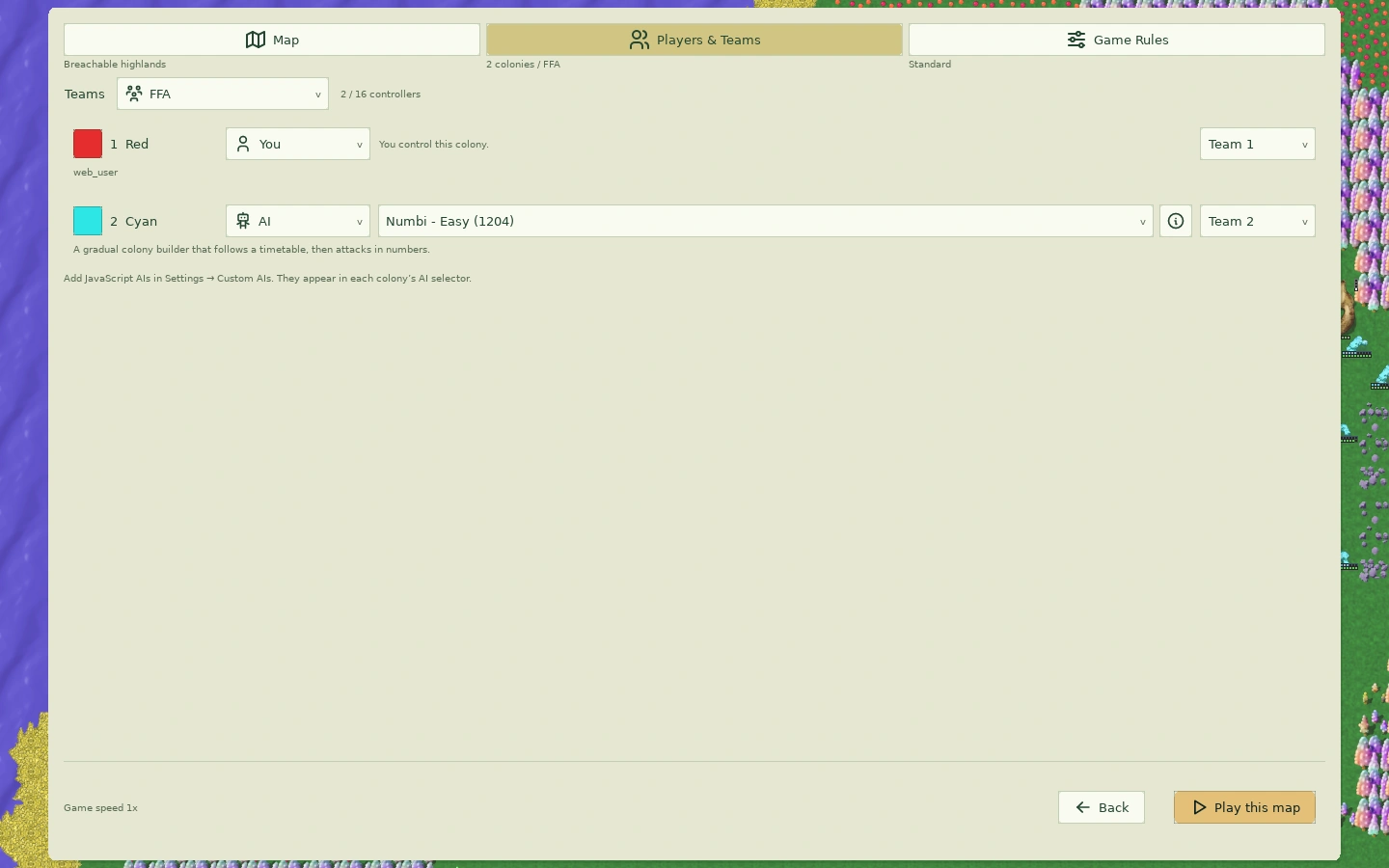
Give yourself three checkpoints: a colony that can feed itself, useful information about Numbi, and defenders whose training you have actually inspected. Save the opening so you can repeat one decision instead of rebuilding the entire experiment.
Establish food before adding demands
Build an inn on clear land with access to wheat and construction wood. Inspect its foundation while workers deliver wood; after completion, check Food, Inside, and Working separately. Resume long enough to see meals and deliveries.
Keep some workers producing and some supplying food. Add another inn when meals and deliveries show a need, rather than because the colony has reached an arbitrary age. An empty food stock, an overfull service, and a long delivery route need different corrections.
In this match, the colony completed an inn, produced explorers, then returned the swarm to worker production. A school, barracks, second inn and hospital followed. These buildings existed before contact, but that alone did not make the defense ready.
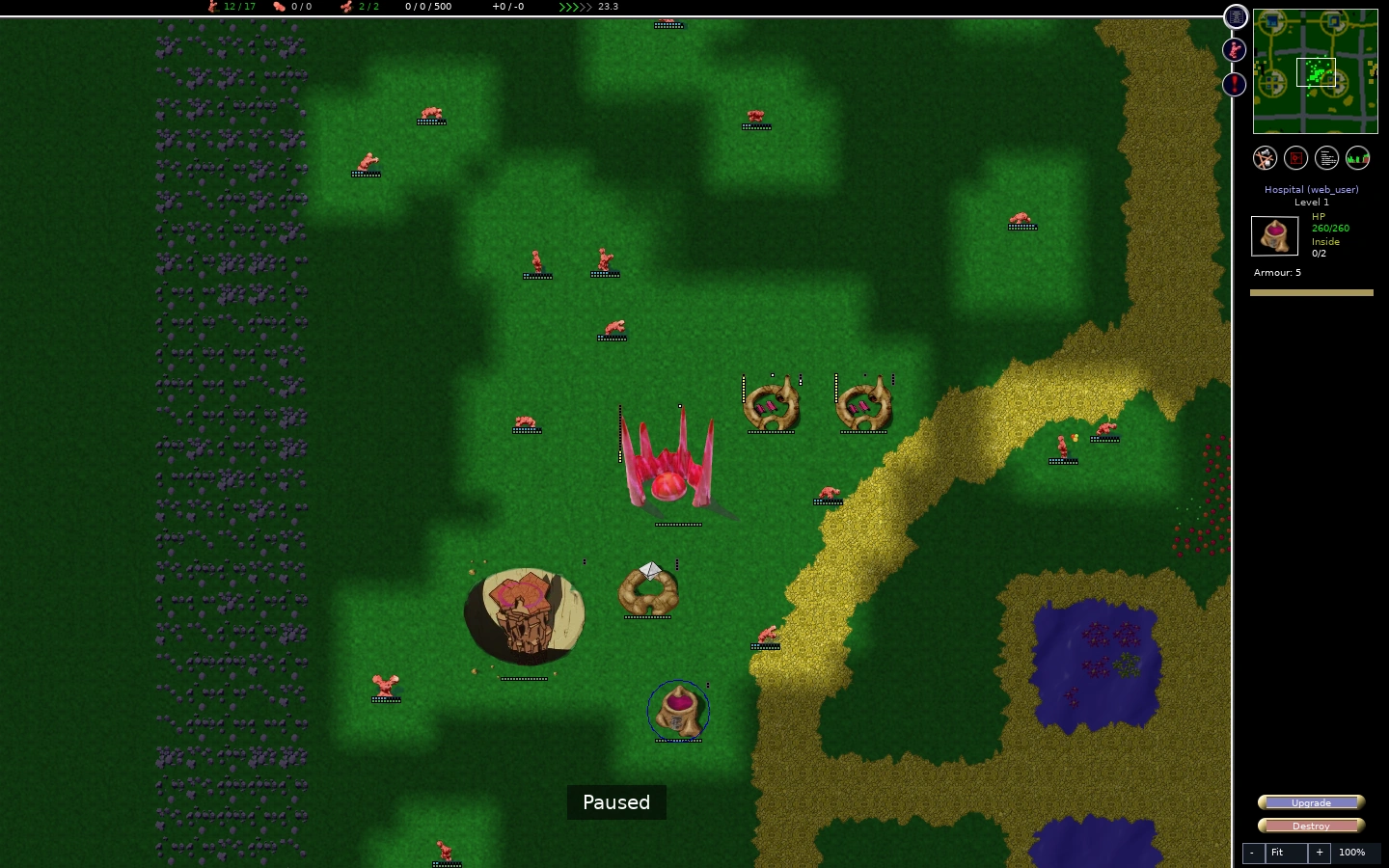
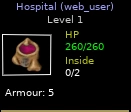
A hospital provides recovery. It does not replace an inn or make an outnumbered army win. Keep food routes and service access usable while developing military production.
Scout the change in Numbi’s colony
Produce a few explorers, then restore enough worker production to sustain your own growth. Use the minimap to inspect revealed territory. If you place an exploration flag, choose a location that answers a useful question: where is the opponent, which route approaches it, or what development can you see?
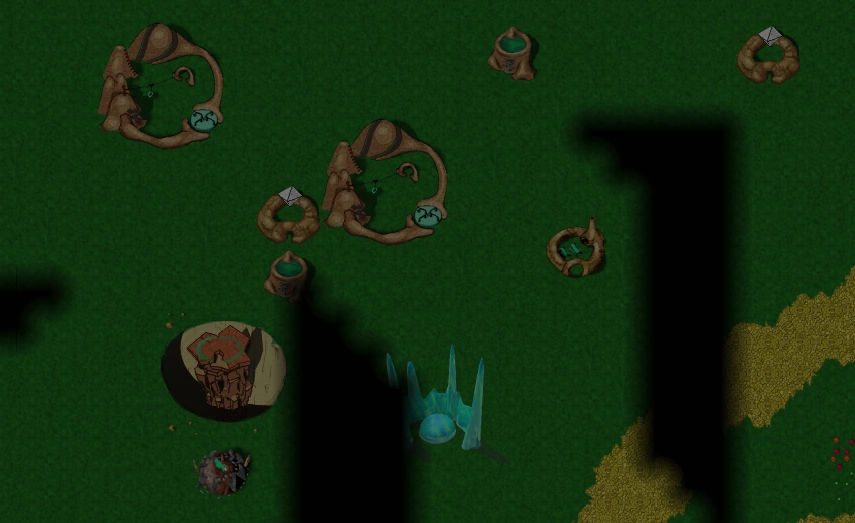
The scouts in this duel revealed schools, upgraded hospitals, a barracks and a tower around Numbi’s swarm. That was a reason to prepare for developed opposition. A visible barracks does not tell you how many warriors have completed training; keep watching units and routes as well as buildings.
Watch whether your information is still current. When explorers disappear or leave the area, remembered structures can remain on the map. In this match the explorer count eventually fell to zero. The familiar outline of Numbi’s colony was no longer a live view of its army.
Move a risky scouting assignment, replace losses deliberately, and avoid sending every new explorer back into the same danger without checking what changed. Preserve a food economy while gathering information.
Prepare units, then check readiness
Numbi’s progression moves from workers and services through development and limited military production, then toward a much larger warrior share. Its attacks depend on available fighting force and its attack controller. There is no useful universal countdown to memorize: map access, food, development and the speed at which you run the game affect what you encounter.
Use the quiet period to make readiness visible:
- Finish a barracks where warriors can reach it.
- Set a nonzero warrior production weight at your swarm while preserving the workers your supplies need.
- Resume and confirm that warriors are born and actually train. Inspect a unit’s abilities; the presence of a barracks is not its training record.
- Check Food and meal access again as the population grows.
- Choose where defenders should gather and how injured or hungry units can return to services.
Watch the warrior total and availability separately. Units already fighting, training or using services cannot all answer a fresh request immediately. A flag requests eligible units; it does not create an army.
What the late defense showed
Gameplay clip
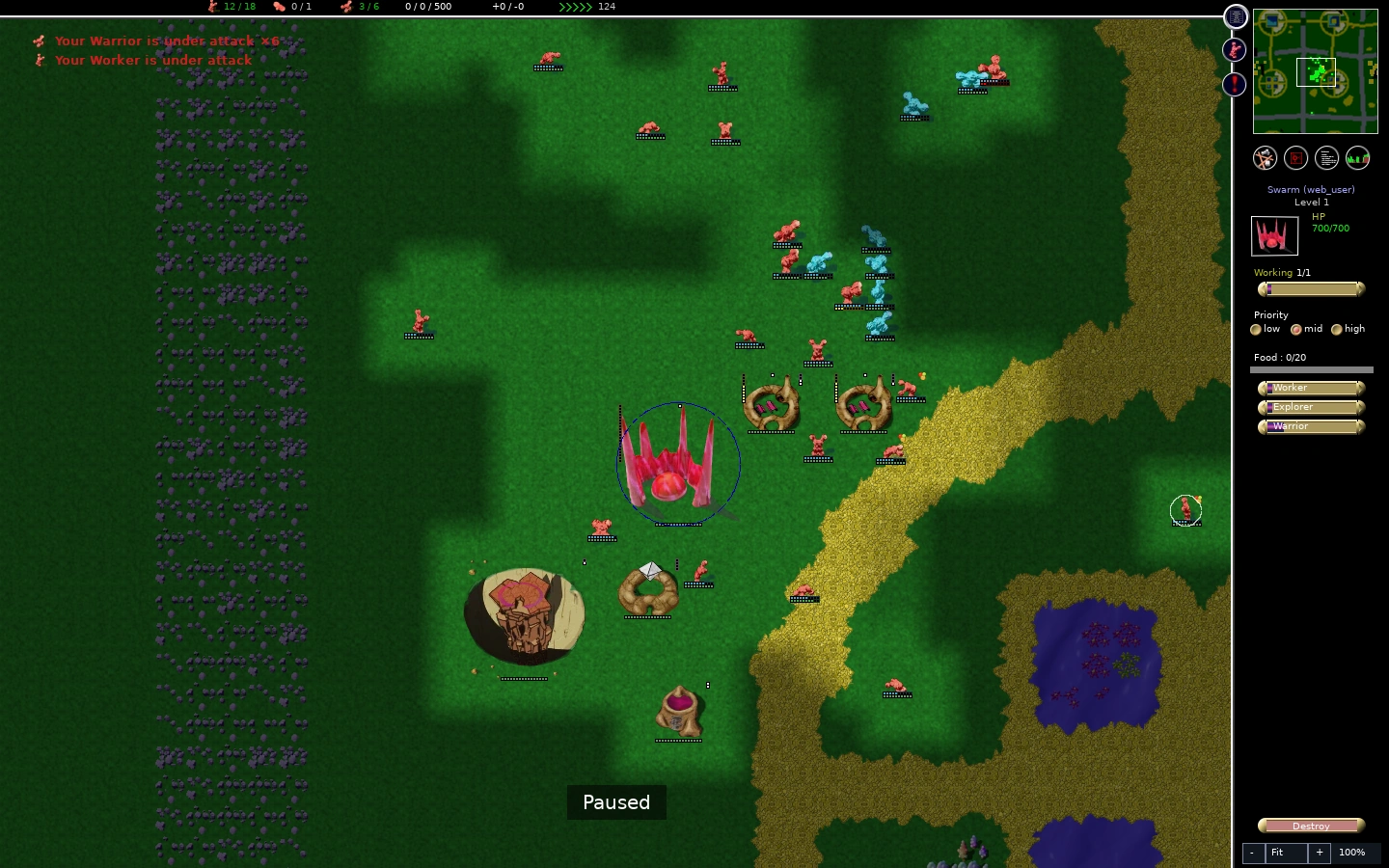
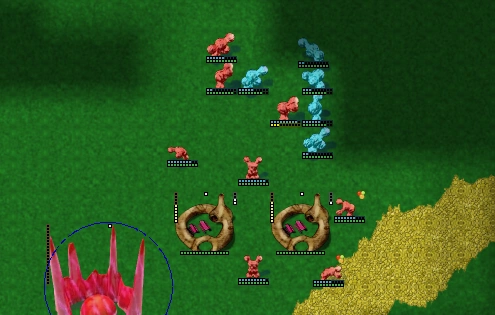
Cyan warriors reached the human colony’s food routes. Red had six warriors in total, with only three shown as available at the captured moment. The swarm, two inns, school, barracks and hospital were still standing. This was already a fight inside the colony.
The response placed a war flag near contact and began a defense tower. That response came too late. The attacking group destroyed the swarm, both inns, the school and the new tower while fighting continued around the remaining barracks and hospital.
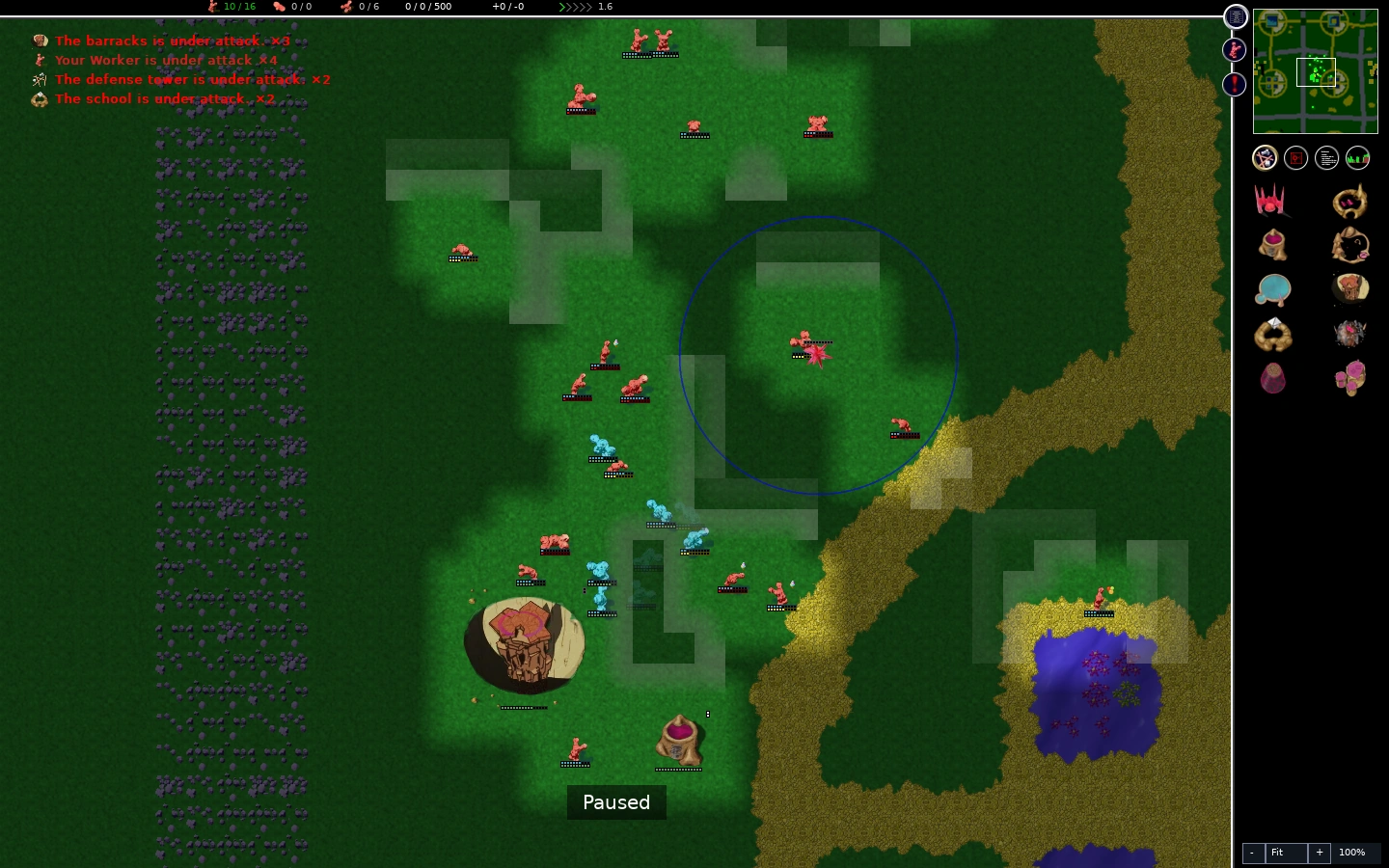
This comparison teaches a concrete warning: starting a defensive project after attackers reach your food and production buildings can leave the builders, supplies and fighting force under pressure at once. The late tower was a failed response in this duel. Do not copy it as a winning emergency recipe.
When contact begins, pause briefly to inspect the threatened buildings, defender positions and remaining services. Reduce unrelated work, keep essential supply requests staffed, and respond with units and structures you can actually use. If food or production has already been lost, reassess what can be rebuilt safely instead of continuing the old expansion plan.
Repeat the decision, not the mistake
Load your earlier save or start another Numbi duel. Before the colony becomes crowded with projects, complete warrior training and inspect the approach. Save that state too. Compare what happens when defenders are ready before contact with the late response shown here.
If Numbi withdraws or stops sending a group, use the breathing room to check food, replace losses and scout again. Its attack controller can end an assault after losses and require more force for the next one. A pause in pressure does not establish that the opponent has stopped developing.
Your practice goal is to explain the difference between a stocked colony, a developed colony and a defended colony. Keep those three conditions working together before experimenting with an attack of your own.